
Lime Dosing MCC for a Water Treatment Works
Built to Form 4 Type 7 — the highest degree of internal separation in the standard — this motor control centre runs the lime batch and dosing process at a water treatment works, with every motor in its own fully segregated compartment. Six drives and starters, weigh-feeder instrumentation and plant-wide Profibus integration sit in a single assembly, alongside six matching local isolator stations supplied for the field equipment.
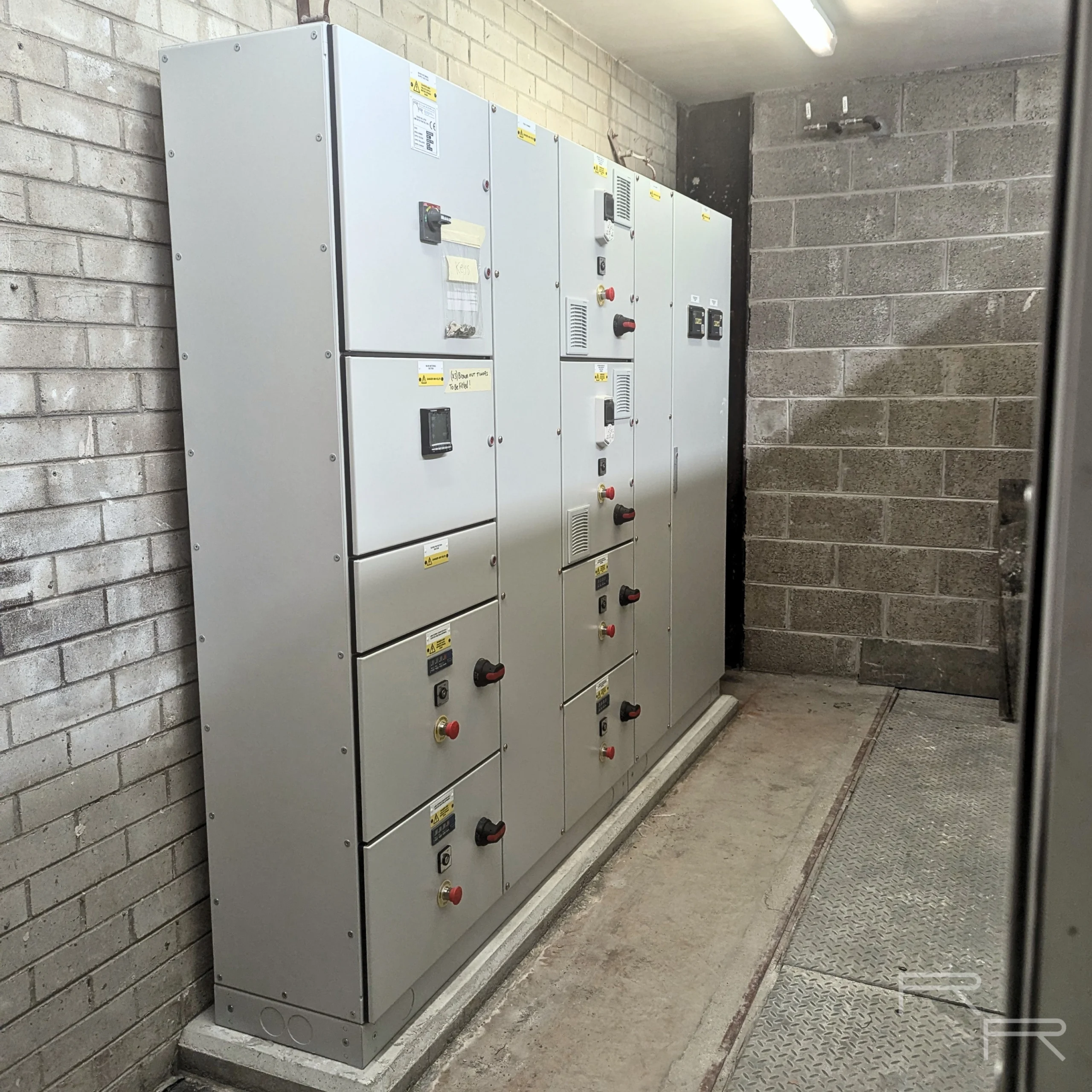
The assembly installed on site, showing the full line-up of motor sections and the common control column.
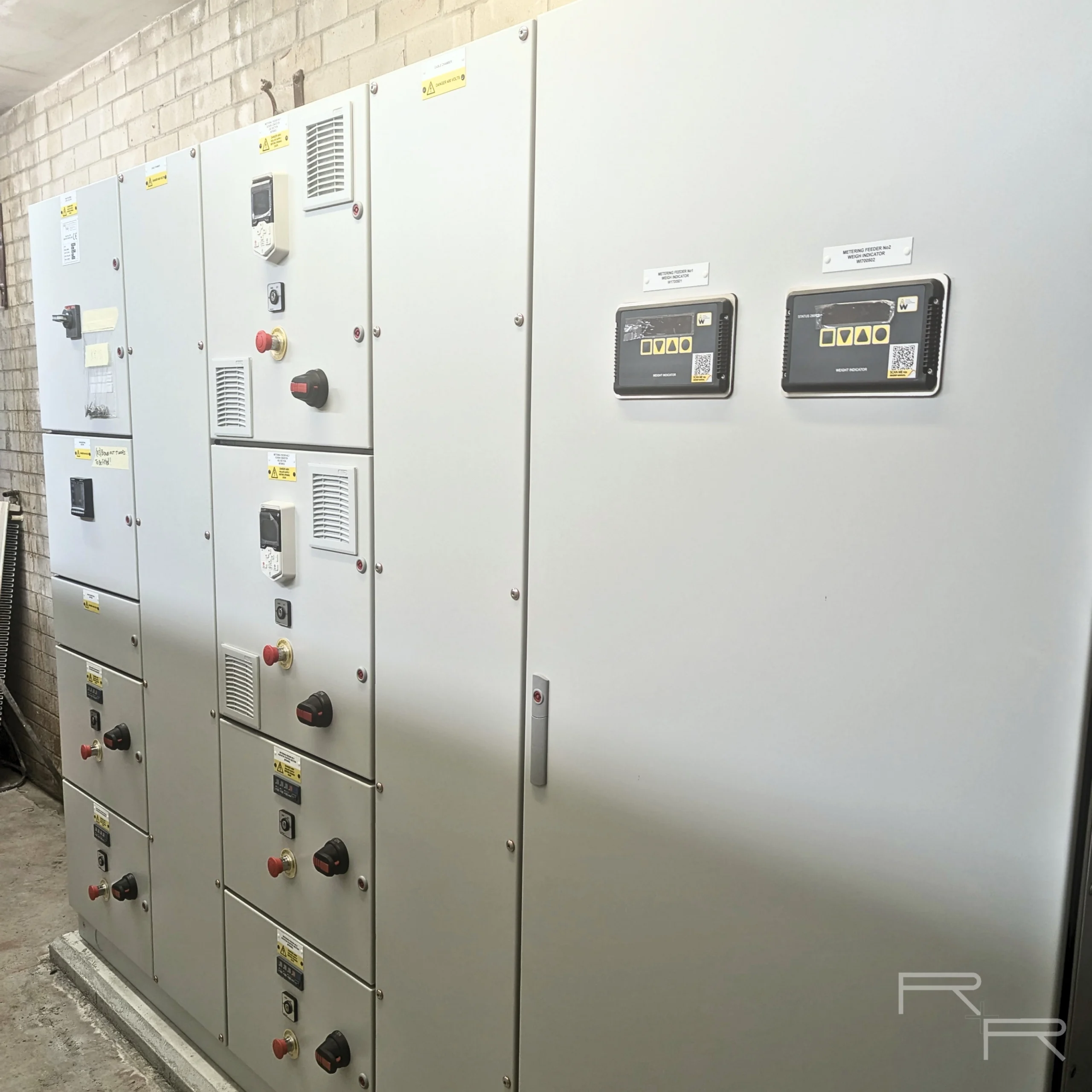
Door-mounted weigh indicators for both metering feeders, on the common control section.
Form 4
Separation
Type 7
Highest Grade
250A
Copper Busbar
6
Motor Sections
THE PROJECT
Lime dosing corrects pH in the treatment process, and it is unforgiving plant to run. The material is abrasive and prone to bridging, dosing has to track flow continuously, and the equipment involved — batch tank agitators, weigh-controlled metering feeders, screw conveyors and polymer dosing pumps — has to start, stop and interlock as one sequence rather than as six separate motors.
The works needed all of that driven from one assembly, tied into the site control system, and built so that maintenance on any one motor could be carried out without taking the rest of the dosing plant out of service.
THE SOLUTION
- Floor-standing Cubic modular enclosure built to Form 4 Type 7, on a 250A copper busbar system with seven cable termination boxes
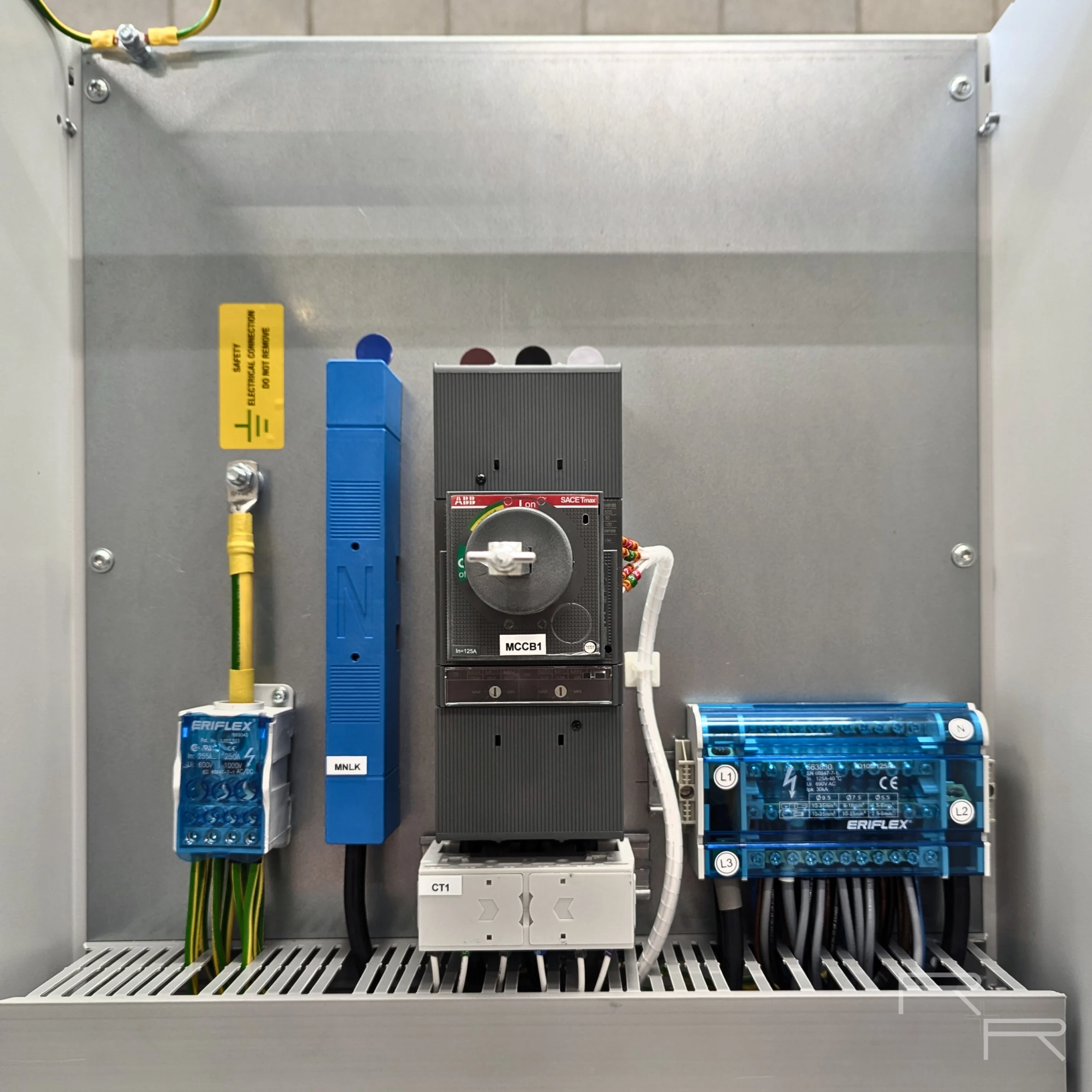
- 125A TP+N incoming MCCB with rotary handle and shrouds, and a 50kA Type 1+2+3 surge arrestor on its own MCB
- Diris A30 energy meter with a Profibus module, fed from a 125A block-type current transformer
- Mains monitoring relay and three brown-out timers, so a sagging supply drops the plant cleanly rather than stalling it
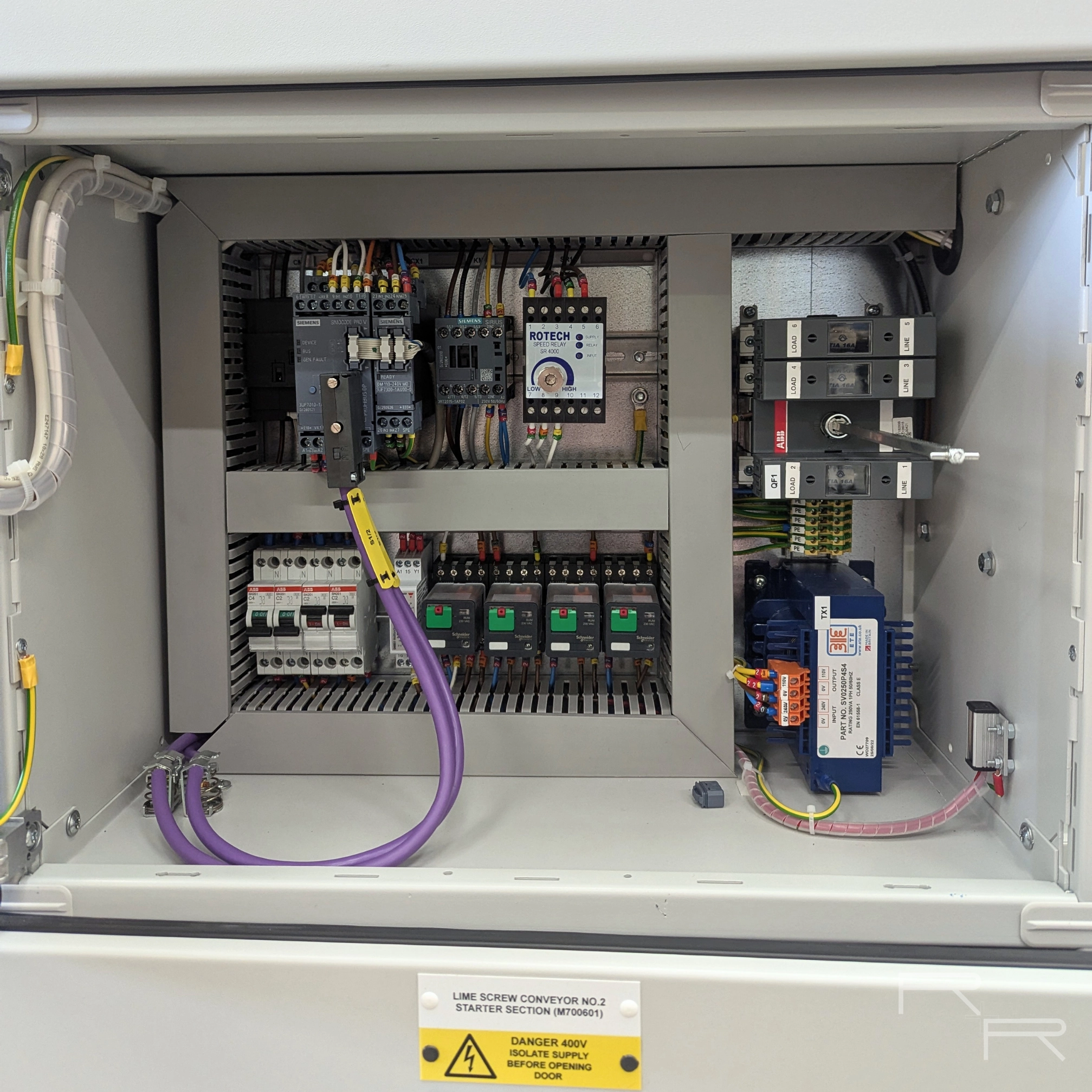
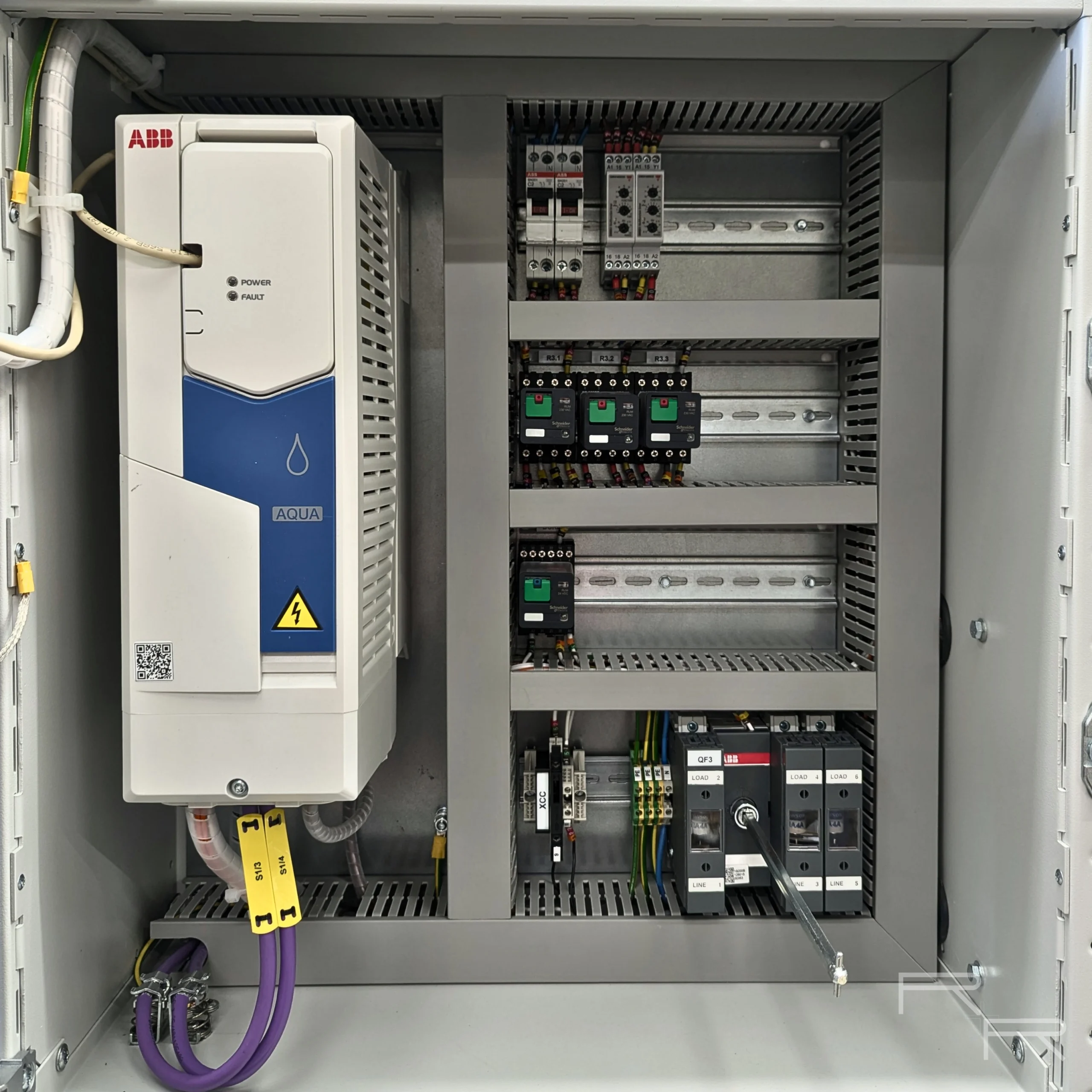
- Six motor sections — polymer dosing pumps, screw conveyors and feeder agitators — each with its own door-interlocked switch fuse, control distribution, relays, timers, hand/off/auto selector, emergency stop and fan, filter and thermostat
- Siemens Simocode motor management on the starter sections, giving current, thermal and diagnostic data over the bus rather than a simple overload trip
- Speed relays on the conveyor drives to detect underspeed and bridging before the batch is affected
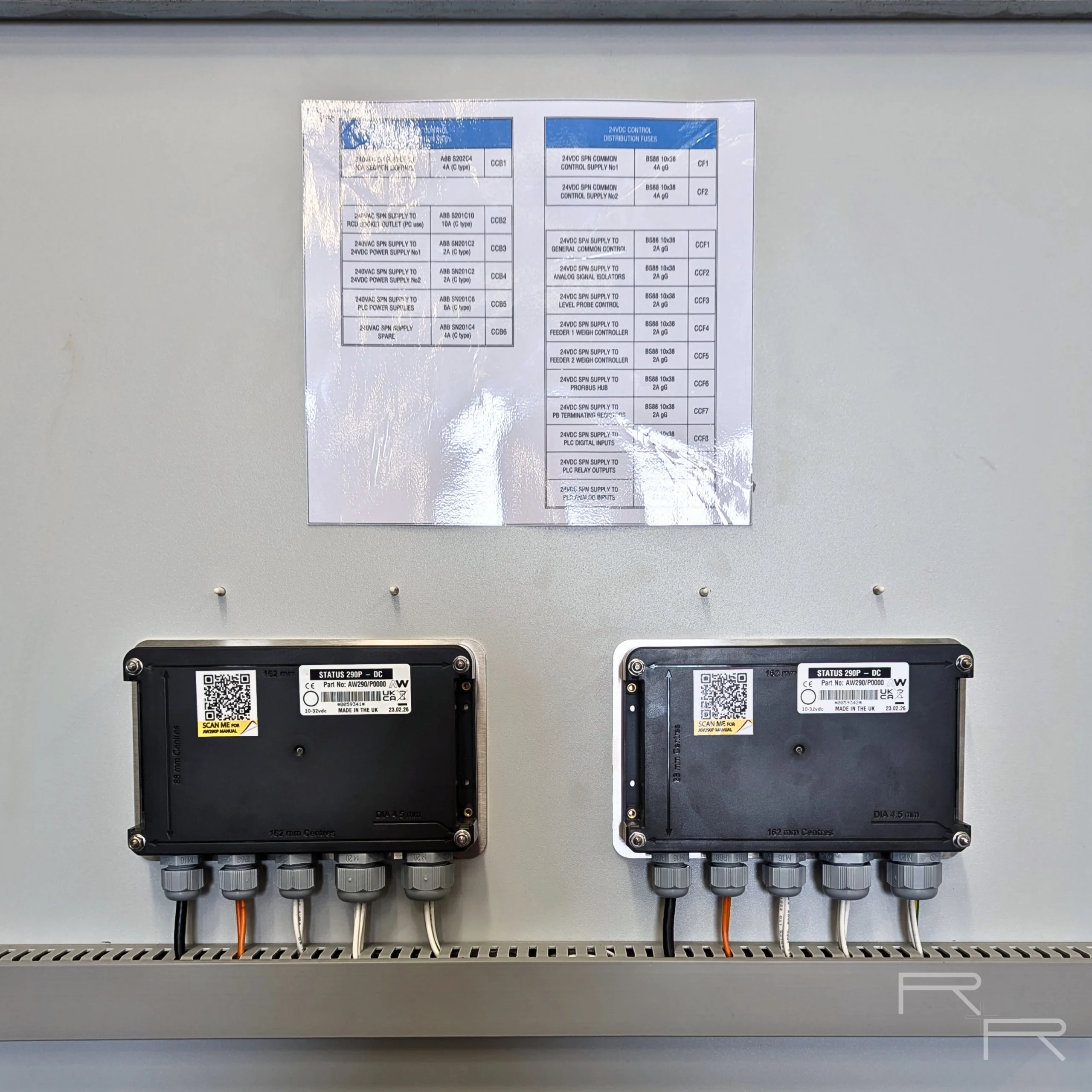
- Weigh transmitters and door-mounted indicators for both metering feeders
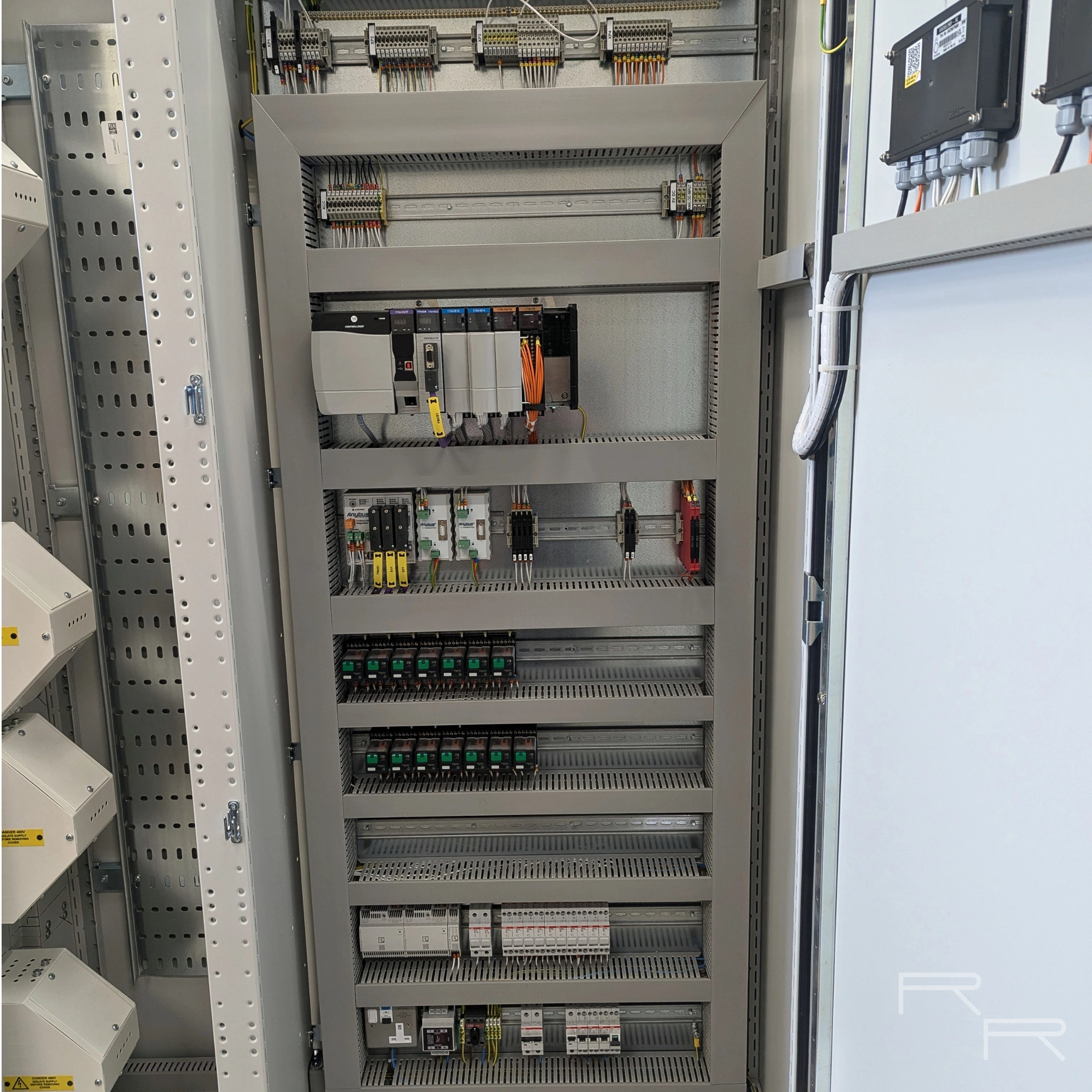
- Allen-Bradley ControlLogix with a Profibus interface, an Anybus ProfiHub with terminated segments, twenty interposing relays and eight signal isolators
- Surge suppression, RCBO socket, panel lighting and a 24V DC supply in a dedicated common control section
- Six matching local isolator stations for the field equipment, each with switch-disconnector, pistol handle, emergency stop and start/stop pushbuttons
- Fully assembled, wired and tested at our Belfast facility before delivery and installation
SPECIFICATION
- Cubic floor-standing enclosure, Form 4 Type 7
- 250A copper busbar, seven cable termination boxes
- 1 x 125A TP+N incoming MCCB with rotary handle and shrouds
- 50kA Type 1+2+3 surge arrestor with 63A MCB
- Diris A30 energy meter with Profibus module and 125A CT
- 2 x ABB 0.75kW VSD, 2 x 2.2kW and 2 x 0.55kW motor circuits
- Siemens Simocode motor management, Profibus throughout
- 24V DC 10A supply, 20 fused control ways, 8 signal isolators
PROJECT DETAILS
- Scope: Design, manufacture, factory testing, delivery and local isolator stations
- Scope: Design, manufacture, assembly, factory testing and delivery
- Completed: 2026
THE OUTCOME
The dosing plant runs as one sequence from a single assembly, with weigh-feeder control, conveyor speed monitoring and pump dosing coordinated through the site control system over Profibus. Form 4 Type 7 separation means any one motor circuit can be isolated and worked on with the rest of the plant live, which on a continuous treatment process is the difference between a maintenance visit and an outage. Simocode diagnostics give the operator current and thermal data per motor rather than a trip indication, so a developing fault on abrasive duty is visible before it stops the batch.
Ready to discuss your project?
Contact our team today to talk through your requirements.